


.png)
As a former English Language Arts teacher at a public school, I can say one thing for certain: teachers feel the impact of every decision made by the Curriculum and Instruction and Assessment departments. They experience both the positives and negatives of radically changing priorities, stats that look good in meeting rooms, and innovative new processes that are supposed to catapult student achievement and save teachers time. When these departments operate independently, teachers are left to reconcile competing focus areas. The teacher’s classroom reality does not match the pacing schedule they’re expected to maintain, nor the assessment schedule that was created before students even entered the classroom.
The result is that teachers spend valuable time adjusting, reacting, and attempting to bridge gaps that should have been addressed at the systems level.
The most effective districts recognize that teacher success begins long before teachers return from summer vacation. It begins when Curriculum & Instruction leaders, assessment coordinators, and campus administrators align around a shared instructional roadmap.
A living Year-at-a-Glance (YAG) provides that roadmap.
The Year-at-a-Glance Should Be a Living System, Not a Static Document
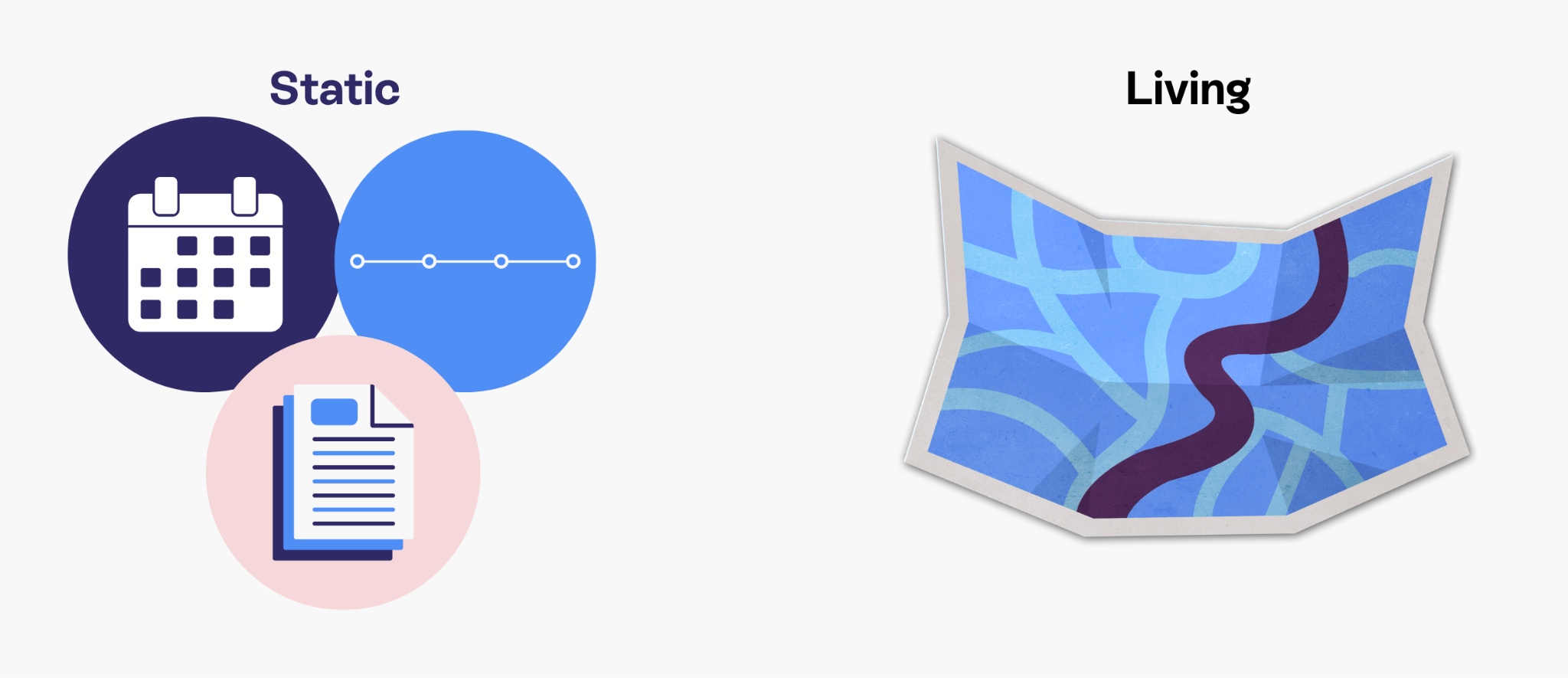
Too often, districts treat the Year-at-a-Glance as a document that is finalized before school begins and revisited only after problems emerge, but teaching and learning do not occur in a static, unchanging environment.
Students progress at different rates, and assessment data uncovers unexpected gaps in real time. New priorities emerge based on the student data and instructional realities shift, but that isn’t reflected in the Year-At-Glance.
The districts with the best student learning outcomes understand that their YAG must evolve alongside those shifting instructional realities. A pacing guide created in July should not dictate instructional decisions in October if student learning data suggests a different course of action is needed. Rigidity can lead to untimely instruction and poor student outcomes.
Likewise, assessment schedules should not remain fixed if instructional pacing indicates students have not yet received the learning experiences necessary for mastery.
A modern planning process allows leaders to continuously evaluate:
- Student mastery of the intended learning objectives
- How much instructional time a unit requires
- Whether assessment windows align with actual instruction
- Which standards require more teaching and intervention
- Adjustments that should be made before student performance suffers
The goal is to make data-informed adjustments at the right time.
Assessment and Curriculum Leaders Need to Work Together to Adapt the YAG

When both teachers and leaders know the instructional priorities, pacing expectations, assessment windows, and student performance trends, they can coordinate to better support the teacher’s efforts to grow students.
Instead of asking teachers to adapt to disconnected instructional plans, the district curriculum and assessment leaders adapt to teachers' needs and the current year's students.
It’s not that curriculum leaders don’t want to adapt; it's primarily that they don’t have the time, resources, or data they need to pivot in the moment and ensure all teachers know about updates and where to look for the new source of truth.
The curriculum leaders we support report several recurring challenges as they build and update YAGs throughout a school year:
- Creating and updating YAGs requires significant manual effort.
- Multiple versions of pacing guides exist across schools and throughout the school year.
- Teachers struggle to determine which document reflects the most current expectations.
- Assessment windows are planned separately from instructional pacing.
- Leaders lack visibility into what instruction occurred before an assessment was administered.
- Data that should inform pacing adjustments remains disconnected from planning documents.
When we shift the responsibility from the individual level to the systems level, we create a proactive system of student support that prepares teachers for success.
Collaborating helps schools become less reactive and more proactive

Many districts discover pacing issues or identify curriculum gaps only after benchmark or state assessment data becomes available. This means they uncover misalignment after students have already struggled, and by then, opportunities to intervene have often been lost. This creates a cycle of retrospective improvement, in which changes are discussed at the end of the year and implemented long after the current group of students could benefit
Teachers know that students need support while they are learning, not after the learning opportunity has passed. Rigidity in their curriculum and instruction systems makes it difficult for teachers to deliver quality, timely instruction to every student. A shared source of truth allows districts to shift from retrospective analysis to proactive action.
When Curriculum & Instruction teams can see upcoming assessment windows alongside instructional pacing, they can identify potential problems before they impact performance. Because assessment teams can see what has been taught leading up to a testing window, they know that assessments are measuring taught content.
Assessing only content that has already been taught is extremely important to measuring the success of a teacher’s instructional initiatives and the integrity of the assessment itself. When assessments measure student performance on content that hasn’t been taught yet, that data isn’t a trustworthy source of information for decision-making.
Connected, data-informed pacing and assessment schedules empower teachers to intervene during the school year when it matters most. Using performance data to make continuous improvements benefits current students, not just future ones.
In “The New Fundamentals of Leadership” by Mike Schmoker, the author uses research from Marzano and Dufour (two of the most pre-eminent experts on collaborative instruction of the last century) to argue that teams must ensure they are "teaching the agreed-upon standards" and that "ongoing assessment informs adjustments in instruction" to be effective.
A shared, continuously maintained Year-at-a-Glance will make teams more effective by giving Curriculum & Instruction and Assessment teams the visibility needed to teach and assess the standards in tandem, proactively adjusting pacing and aligning assessments to instruction so that teachers can receive support before formative learning gaps become summative student outcomes.
Transparency between teams creates a culture of shared accountability for student progress

Perhaps the greatest benefit of a unified planning system is transparency. When curriculum, assessment, and instructional teams can’t see into each other’s plans and expectations, it becomes someone else’s responsibility to implement and adjust.
Growth and progress are halted because teams constantly knock the ball back into each other’s court, asking, “Who is responsible for making this happen?” Thus, placing too much focus on accountability and ownership rather than solving the problem together. One small shift can alter the compliance mindset to one of collaboration.
In this system:
- Curriculum leaders plan based on assessment timelines
- Assessment teams adjust to live instructional progress
- School leaders are aware of both the established assessment timelines and the progress of the current year’s students.
- Teachers can confidently teach and adjust instruction because assessment and curriculum plans are aligned
When your year-at-a-glance is a living system rather than a static document, everyone operates from the same information and priorities. Both teachers and leaders know what students need next and are prepared to adjust.
Transparency aligns leaders and teachers in a way that disconnected planning processes cannot. Most importantly, every decision (from pacing adjustments to assessment scheduling) is made with a single, overarching goal:
To provide teachers with the support, clarity, and instructional conditions necessary to help every student succeed.
How Beacon Makes This Possible
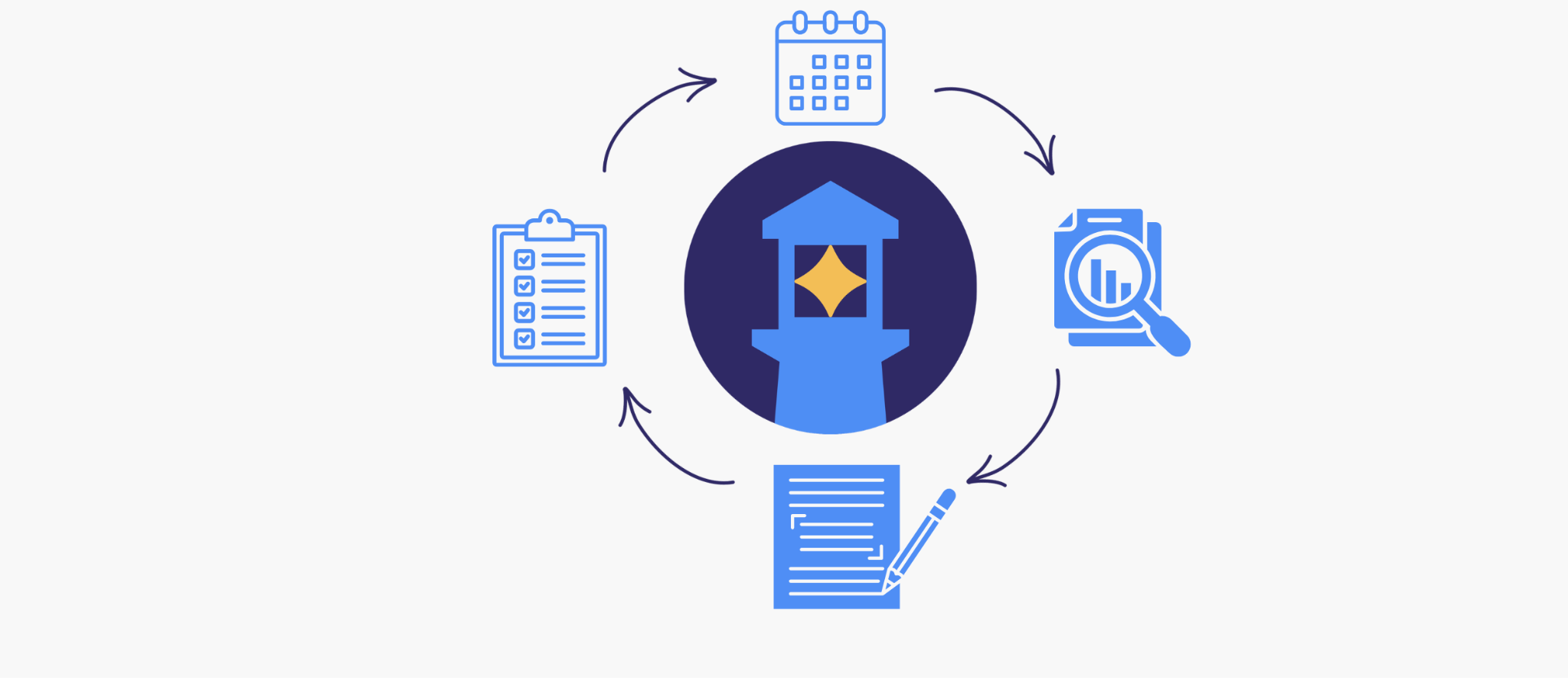
At Eduphoria, we believe curriculum, instruction, assessment, professional learning, and professional development should never operate in isolation. That’s why we intentionally build unified experiences within our products that work better together.
We've introduced new capabilities designed to create a true single source of truth for Year-at-a-Glance planning and assessment alignment.
District leaders can now:
- Build and maintain dynamic Course Year-at-a-Glance calendars that are easy to update throughout the year (and are automatically visible to teachers in their planner).
- Instantly make pacing adjustments for teachers without having to manage multiple versions of documents.
- Analyze curriculum maps, learning objectives, instructional plans, and assessment windows within a single system.
- Make district assessment plans visible across schools.
- Connect instructional planning with assessment data to inform future pacing decisions.
- Ensure teachers always have access to the most current expectations and timelines.
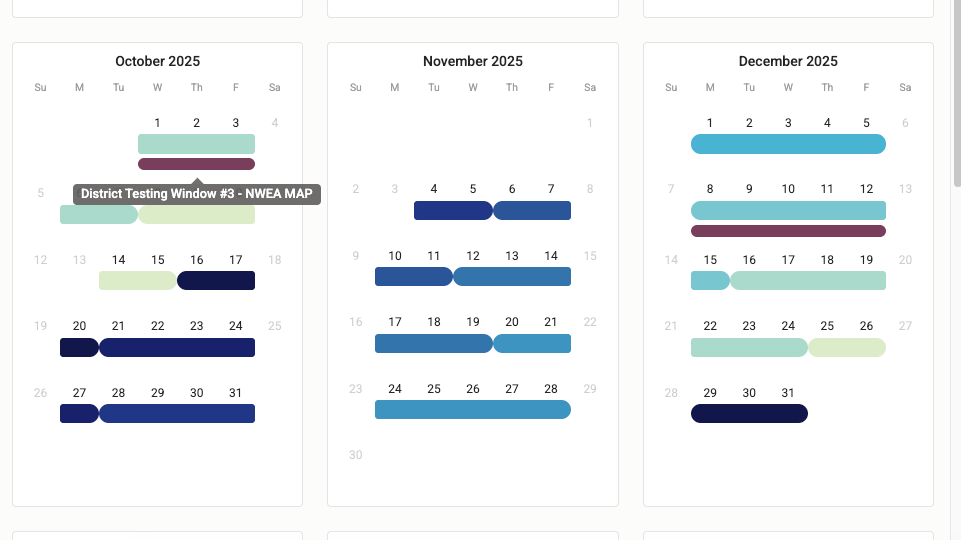
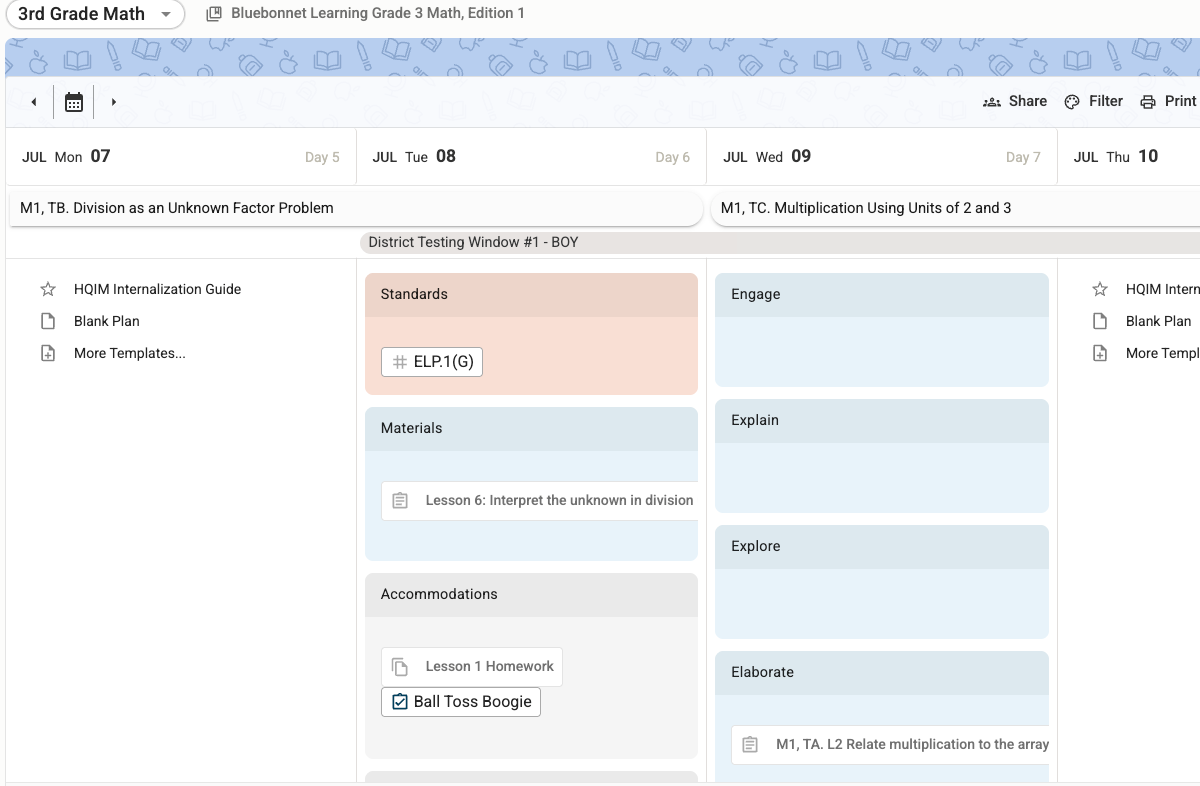
When curriculum, instruction, and assessment teams work from the same source of truth, everyone can make clear, confident decisions, and teachers aren’t saddled with the accountability to make adjustments on their own.
Teachers spend less time searching for information.
Leaders spend less time managing documents.
Assessment results can lead to meaningful change.
And students benefit from a learning experience where what is taught, what is assessed, and what is learned are finally aligned.
Want to see what total alignment looks like? Book a demo with us
Our team is full of educators with decades of experience. We’ve crafted this tool to make it easier to collaborate, sync with your team, and make data-informed decisions. If you’d like to see how Beacon could unify and align your district’s focus, hit the demo button at the bottom of the screen.
.jpeg)



%20(1).png)
%20(1).png)
%202.png)